Author Archives: admin

Cities’ Identity Through Architecture and Arts (CITAA)

Cities’ Identity became a pressing issue for many countries nowadays. Every city has its unique and valuable identity, this identity is revealed through its physical and visual form, it is seen through the eyes of its residents and citizens. The city develops over time, and its identity evolves with it. Reflecting the rapid and constant changes the city is subjected to, Architecture and Arts are the embodiment of the cultural, historical, and economical characteristics of the city.Urban Identities: the conference will present & discuss examples and tendencies in dealing with urban identities as well as the transformation of cities and urban cultures mentioned in terms of their form, identity, and their current art.
Contemporary art when subjected to experiments, continues to be produced in various directions, to be consumed and to put forward new ideas. Art continuously renews itself -from new materials to different means of communication, from interactive works to computer games, from new approaches to perceptional paradigms and problems of city and nature of the millennium.

This conference is dedicated to the investigation of the different new approaches developed in Architecture and Contemporary arts. It will focus on the basis of urban life and identities. The Conference also will display how citizens look at their city and how it is in a physical or mental manner compared, by them, with the ideal city by their own perception. Moreover, the city’s identity presents distinctive aspects that clarify its uniqueness and distinguished from any other city.

IEREK aims with this conference to offer the researches from different perspectives and views how Architecture and Contemporary arts are developed. Also, IEREK aims to emphasize on the basis of urban development and identities as well as investigate the various approaches made in the field of both Architecture and Contemporary Arts.
he Conference will be held in a Venue that combines both Architecture and Contemporary Arts, the TCairo Opera House in Cairo, Egypt.

See more details here…

Cultural Sustainable Tourism (CST)

Many countries and their economies, and industries depend on tourism, an economic might, which is able to direct the flow of the world. Cultural Tourism is the subset of tourism that is concerned with the country’s lifestyle in certain geographical areas, such as their, art, architecture, rituals, festivals, and more values that help convey the culture of the country itself. Cultural tourism involves the visitor getting involved or in contact with the unique heritage and special character of a place. More awareness of the place’s values, languages, lifestyle, and customs is conveyed to the visitor. Through tourism, lays the possibility of associating cultures together, assisting in creating cohesion amongst the world’s inhabitants. Considering that culture and heritage are two important factors in attracting tourists, they maintain their stature as a resource for development, and for improving the economy.

That being said, Heritage and Culture are both two important assets that should be maintained, conserved, and enhanced. Improving the life quality, living conditions, and reducing poverty will help in further preserving the cultural and natural heritage. Making such assets within reach of humanity, conveying civilizations through a powerful tool as tourism, is considered sustainability of cultural tourism development. Reaching and maintaining such objectives, would require, high standards in design & implementation of tourism policies, and conservation and preservation policies. Involving the participation of communities, in preserving, enhancing, and improving the cultural heritage for the following decades.

Balancing between the society, environment, and tourism in order to lessen the negative impacts, and have more positive effects, can only be achieved through spreading creativity, and cultural diversity, through maintaining awareness for the importance of cultural tourism and their everlasting positive effects. Cultural Sustainable Tourism (CST- 2017) discusses the complex relations between Culture, and tourism, and how planners, architects, and main actors and help in conveying and spreading the right perspective of the importance and role of Cultural tourism and how to maintain it.

See abstract deadline and authors instructions

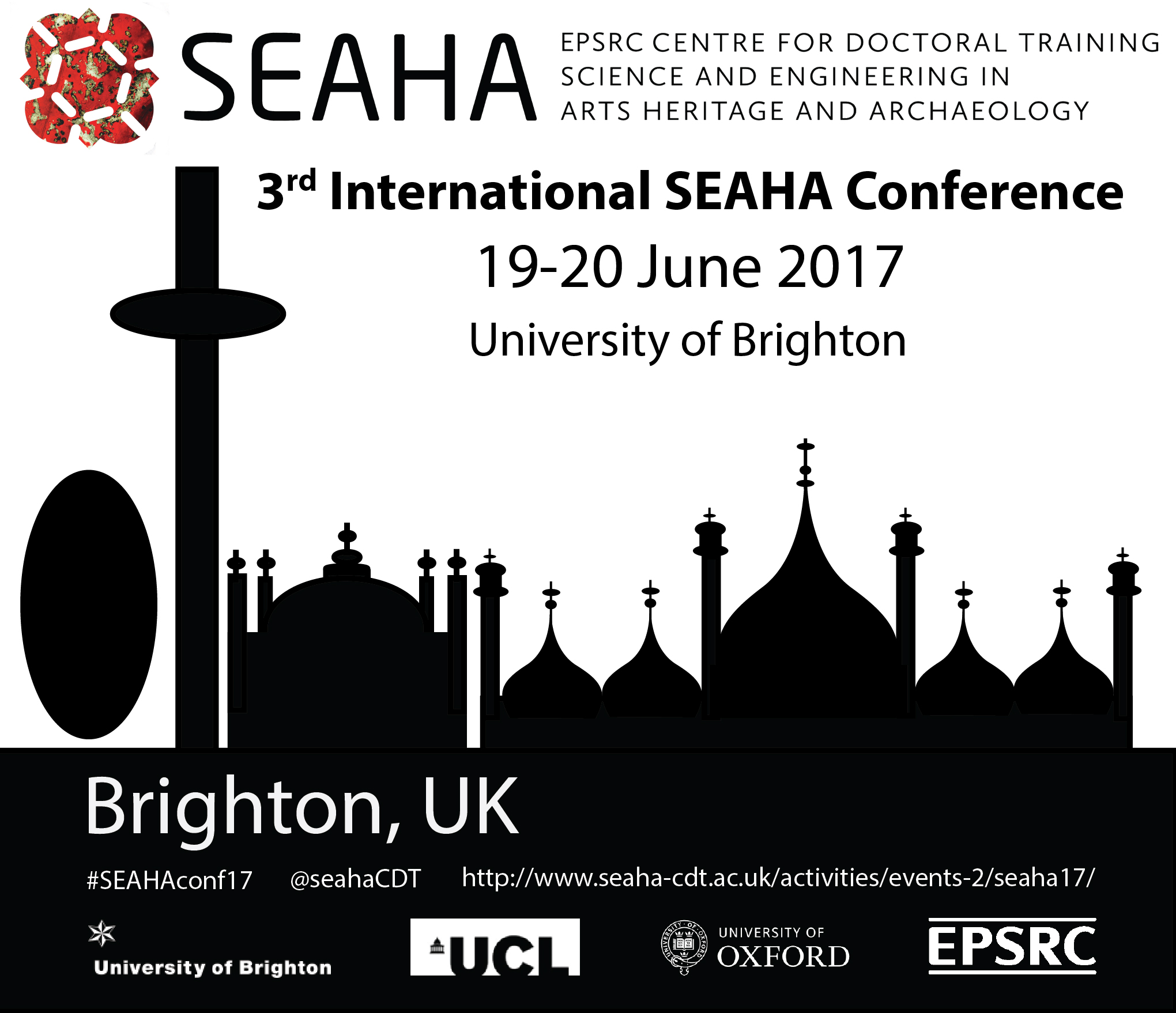
3rd International Conference on Science and Engineering in Arts, Heritage, and Archaeology (SEAHA)

Call for Abstracts

SEAHA research strands represent the full cycle of the creation of data, data to knowledge and knowledge to enterprise generally aligning with three training streams: Materials, Environment and Digital. The conference embraces these themes while also focusing on the interdisciplinary nature of heritage science research and projects. We are particularly keen to attract presentations and posters looking at interdisciplinarity: the challenges, successes, and impacts of research crossing boundaries.

Abstract submissions will open soon.


Identity and the City: Transition and Change in Urban Image Construction in Central and Eastern Europe

Panel Description:

Urban image construction is a reflection, expression and constitutive factor of local identity formation and dynamics. Cities simultaneously localize identities and connect them with wider global signs of utility, function and symbolic order. Elasticity of the label identity accommodates everything that surrounds us as presence or absence, persistence or change. As a theatrical scenery, cities change after each act, sometimes with discrete adaptations, sometimes with radical interventions. If the scenery is composed of streets, parks, roads, museums, monuments, shopping malls and buildings connected through the intricate network of the perpetual and cumulative actions of its inhabitants, every adaptation and intervention affects its multi-dimensional identities. Changes in urban visual identities unfold as a form of public art feeding from the immense potential of social imaginary significations accommodated by a time’s perception of stability, structure and continuity. Urban change is itself a production of meaning, interpretation and identity making practices.

As the chaotic canvases of cities are being stretched over a framework of identity, its further exploration seems more than appropriate. Amidst the incredibly rapid urban growth crowding more than half of the world population in towns and cities, the questions are only going to keep multiplying. How are city identities made and re-made, used and abused, imagined and narrated, politicised and communicated, expressed and projected, imposed and marketed? And above all, how do they thrive within the dynamic interpolation of the nexus of local-global, centre-periphery, urban – suburban, old and new. As out-dated as these dichotomies may sound, in many places their daily life is far from over. As old cities became new capitals and new capitals struggle for more capital, the challenges of maintaining public-driven collective identities in the face of cultural fragmentation and diversification, coupled with consumer-attractiveness is turning them into urban palimpsests. Urban environments reflect the human needs and values. In an increasingly globalized world, the human beings are becoming more citizens of the world than citizens of the cities. The increasing mobility of the new pilgrims of globalization creates more of the same in the logic of universalized urban functionality. Within this logic, the cities are now in the position to re-evaluate their impact on the world and shape their future in a manner that assumes a wider responsibility that evades a localized mentality. Urban local identities are becoming increasingly thin and rely strongly on negotiating a local specificity with universalized functionality and global responsibility. An increasing need for uniqueness and distinctiveness foster site-specificity aimed at placing a particular urban identity within a global economic hierarchy. Public art became essential for affirming distinctive local urban identities in a universe of serialization and commodification.

As the research on cultural identities of the city is becoming more abundant, this panel aims at adopting a wide-lens inter-disciplinary approach, while focusing on various processes affecting identities in the urban context in its global-regional-national-local interplay.

Some example of topics may include (but are not limited to):

•       Collective Memory, Identity and Urban Image Construction
•       Appropriation, Instrumentalisation and Functualisation of Public Spaces
•       Contemporary Nomadism and the City as a Common Denominator for Collective Identities
•       Architecture as ‘Politics with Bricks and Mortar’
•       History, Heritage and Urban Change
•       Urban Regeneration Projects, Landmark Buildings and ‘Starchitects’
•       Non-Places and (Non)Identity
•       Immigrants and the Cultural Identity of Cities
•       City Marketing and City Branding
•       Cities and Public Goods
•       European Capitals of Culture and European Identity
•       Cities and Sites of Memorialisation
•       Identity Creation and the Cultural Offer of the City
•       Urban Cultural Heritage as Identity-Anchor
•       Minor Places: Dominant Culture and Site-Specific Urban Identities
•       Creative Changes of the Cities
•       Art and Industry in Urban Development
•       Urban Aesthetics
•       Urban Installations
•       Critical Architecture
•       Urbanism and Social Intervention: Inclusion of the Marginalized
•       Centre/Periphery Nexuses in Contemporary Urban Development
•       Cities and the Quality of Life
•       Urban Landscapes and Sustainable Cities
•       Contemporary Cities and Environmental Responsibility
•       Ugliness, Kitsch and Value in Shaping Contemporary Urban Spaces
•       Urban Sites of Identification
•       Temporary Urban Interventions
•       Architecture as Public Art

If interested in participating, please see full details of the event on the conference website and use the application form to apply on-line or send a maximum 300 words abstract together with the details of your affiliation until 10th of December 2016 atapplication@euroacademia.eu

For full details of the conference and on-line application please see:
http://euroacademia.eu/conference/6th-reinventing-eastern-europe/
BRIDGE: The Heritage of Connecting Places and Cultures

Second Call for Papers Deadline: 16 January 2017
https://bridgeconference.wordpress.com/call-for-papers/

About: Bridges physically and symbolically connect places, communities and cultures; they remind us of division while at the same time providing the means for unification. This conference seeks to explore heritage of bridges –not only as remarkable physical structures connecting places and cultures but also as symbolic and metaphorical markers in the landscape.

Indicative themes of interest to the conference include:
•       The materials and technologies of bridges – the heritage of form and function
•       National and local iconographies of bridges
•       Narratives of bridge construction and destruction
•       Communities united and communities divided by bridges
•       Poetics of the bridge – representing the bridge in art, literature and film
•       Love and death on the bridge
•       The language of the bridge – metaphors and meanings in social life
•       Touring bridges – travel narratives and tourism economies
•       Alternative bridge crossings – tunnels and ferries

Please see the website for full details and call for papers.

Web Link: https://bridgeconference.wordpress.com/call-for-papers/
Organisers: Ironbridge International Institute for Cultural Heritage (University of Birmingham), Ironbridge Gorge Museum Trust
Contact: Hannah Stretton, Ironbridge@contacts.bham.ac.uk

INCUBATORS Conference. Urban Living Labs for public space. A new generation of planning?

The Incubators conference will explore the potential of urban participatory design through the role urban living labs to mediate between the everyday practice, including the innovation of digital tools, crowdsourcing and crowdfunding in the (re)design of public spaces.

We are interested in questions such as:

– What role can crowdsourcing play for public spaces?
– What happens when urban planners are no longer the only ones holding the pen and citizens become empowered to self-organize?
– What communication is needed to support participation processes?
– How are structures, ideas and proposals visualized and applied in urban living labs?
– Can new technological means empower civic self-organisation and how does this impact the authority of the public power in planning?

We especially welcome all types of actors in participation: from researchers in academia to practitioners, public institutions, civic associations, and citizens involved in a living lab or participation process.

Dates:
10-11 April 2017

Location:
KU Leuven, Faculty of Architecture, Campus Sint-Lucas, Paleizenstraat 65-67, B-1030 Brussels

First deadline:
Submission of abstract for peer review: November 15, 2016

Full details here:

http://arch.kuleuven.be/incubators

Historic building materials

Construction Materials is planning a themed issue for 2017 on historic building materials.

The history of construction includes a variety of traditional materials that have been developed over the centuries through trial and error or experimentation. Protecting historic structures preserves not only the materials, but also the traditional skills and techniques employed by builders of the past. Understanding the character and condition of historic building materials is paramount to the development of appropriate building conservation programmes and repair strategies.

Although standard techniques for modern materials are often used to great effect, historic building materials can present problems for analysts due to their comparative rarity and unusual characteristics.

This themed issue of Construction Materials will bring together the experience of researchers and experts to discuss the unique problems and best practices for the investigation and scientific analysis of all types of historic construction.

Please submit a 200-word outline of the article you would like to write by 30th November 2016.

To learn more about the themed issue and for a list of topics please download the Call for Papers. For more information on the journal, please visit the website.

Heritage, Place, Design: Putting Tradition into Practice

2017’s Milan conference will investigate methodologies of representation, communication, and valorisation of Historic Urban Landscapes and cultural heritage but also placemaking and local identity enhancement.

The conference will promote holistic and multidisciplinary approaches to design which are adapted to meet the challenges of tomorrow, and which support the unique heritage, cultural landscapes and communities that have been developed by local traditions around the world. Participants will share case studies and current practice on the documentation of settlements that should be preserved, focusing on innovative solutions, design challenges in placemaking and identity conservation, cultural issues in heritage assessment, and the technical and craft expression of culture. Critical to the presentation of case studies and current practice will be the use of drawing as a tool for design and creativity.

 The conference aims to foster an international exchange of research, case studies, and best practice to confront the challenges of designing places, building cultural landscapes and enabling the development of community. The conference also aims to promote research on new core knowledge in the field, and on applications of this knowledge that are contributing to our understanding of the evolution of traditional and historical knowledge.

Further information and Call for papers here…

Historic building materials

The history of construction includes a variety of traditional materials that have been developed over the centuries through trial and error or experimentation. Protecting historic structures preserves not only the materials, but also the traditional skills and techniques employed by builders of the past. Understanding the character and condition of historic building materials is paramount to the development of appropriate building conservation programmes and repair strategies.

Although standard techniques for modern materials are often used to great effect, historic building materials can present problems for analysts due to their comparative rarity and unusual characteristics.

This themed issue of Construction Materials will bring together the experience of researchers and experts to discuss the unique problems and best practices for the investigation and scientific analysis of all types of historic construction.

To learn more about the themed issue and for a list of topics please download the Call for Papers. For more information on the journal, please visit the website.

Please submit a 200-word outline of the article you would like to write by 30th November 2016.


Bridge: The Heritage of Connecting Places and Cultures

Bridges physically and symbolically connect places, communities and cultures; they remind us of division while at the same time providing the means for unification. This conference seeks to explore heritage of bridges –not only as remarkable physical structures connecting places and cultures but also as symbolic and metaphorical markers in the landscape.
Indicative themes of interest to the conference include:8

•       The materials and technologies of bridges – the heritage of form and function
•       National and local iconographies of bridges
•       Narratives of bridge construction and destruction
•       Communities united and communities divided by bridges
•       Poetics of the bridge – representing the bridge in art, literature and film
•       Love and death on the bridge
•       The language of the bridge – metaphors and meanings in social life
•       Touring bridges – travel narratives and tourism economies
•       Alternative bridge crossings – tunnels and ferries

The conference welcomes academics from the widest range of disciplines and wishes to act as a forum for exchange between the sciences, social sciences and the humanities. The conference will draw from anthropology, archaeology, art history, architecture, engineering, ethnology, heritage studies, history, geography, landscape studies, literature, linguistics, museum studies, sociology, tourism studies etc. The conference will take place at the World Heritage Site of Ironbridge Gorge – the birthplace of the industrial revolution and the home of the World’s first iron bridge.

See how to submit an abstract and further details here.